Everyone has a place.
Pull up a chair.
If you’ve ever looked around and wondered where your people are. . . Pull up a chair. You’re in good company.
I didn’t grow up feeling like I belonged anywhere. I don’t say that for sympathy – it’s just part of my story. Like so many of us, I spent years trying to fit into places that never really fit.
Then life happened. My brother died. People I thought would always be there. . . weren’t.
Grief has a funny way of making you grab onto the first thing that feels solid. For me, that led to a whirlwind marriage built more out of fear than belonging.
When that chapter ended, I had a choice. I could keep trying to force myself into tribes that didn’t feel like home. . . or I could figure out what belonging actually is.
That search changed everything. It led me back to my faith. It led me led me toward healing. It led me to anthropology.
Somewhere along the way, I realized I’d started looking at my own life the same way the same way I look at ancient cultures – not with judgement, but with curiosity. Instead of asking, “What’s wrong with me?” I started asking, “What happened here?” “What was I carrying?” “What was I trying to build?”
Around that same time I became fascinated with the ancient Jews. At first I thought I was studying history. Then I realized I was studying people who also wondered through the wilderness.
If I wanted to understand what it meant to walk through uncertainty without losing hope. . . who better to learn from?!
They left slavery behind but brought memories with them. Stories. Trauma. Traditions. Recipes. Songs. Names. Promises. Fear. Hope. The Red Sea didn’t erase their invisible language. It simply carried them into the next chapter.
Anthropology taught me to ask questions before making judgments. Scripture taught me that wandering isn’t always punishment. Sometimes it’s preparation.
I spent years trying to outrun loneliness. I built relationships that weren’t healthy because I was starving for belonging. When they inevitably fell apart, I found myself in a wilderness I never expected.
The Blue Zones taught me something profound: people don’t live longer because of one thing – they live longer because of community. Purpose. Shared meals. Movement. Faith. Friendship. Not one magical ingredient. A healthy tribe. And maybe that’s what I was really searching for all along.
These days, I’ve let go of relationships that weren’t healthy. I’m learning that being alone isn’t the same as being lonely. I’m becoming more patient. Instead of trying to convince the wrong people to stay, I’m making room for the right ones to arrive.
That’s what Tribal-ology is. My field journal. A place where I’ll share stories from museums, churches, road trips, kitchens, hiking trails, archeological sites, festivals, conversations with strangers, and wherever curiosity leads me next. Some days I’ll have more questions than answers. I hope you’ll come anyway.
Pull up a chair. The table is just getting started.
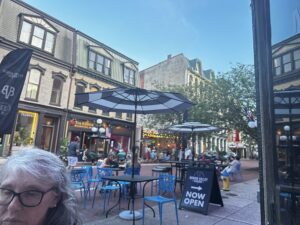
Next Expedition
Mortimer Bibb’s – Frankfort, Kentucky Where strangers become stories.
Field Reflection #0001
What makes people feel they belong? Every expedition begins with a question. This is mine. Over the coming months, I’ll carry it into churches, museums, cafes, archeological sites, hiking trails, shared meals, and conversations with strangers. I’m not looking for quick answers. I’m collecting observations. Perhaps belonging isn’t something we stumble upon. Perhaps it’s something we build – together.
Invisible Luggage
What we carry from one chapter to the next. . . -Stories -Trauma -Traditions -Recipes -Songs -Names -Promises -Fear -Hope
Current Study
Location:
Kentucky
Research Focus:
Ancient Judaism, Early Christianity, Material Religion & Human Belonging
Current Question:
What makes people remain themselves while everything around them changes?